Frozen pipe bursts, slow drips, basement leaks, corroded lines, and aging plumbing systems — diagnosed clearly, fixed cleanly, and explained honestly. Master Plumber on every job.
The combination that wrecks pipes here: subzero winter temps + older homes with poor sill insulation + people forgetting to detach garden hoses in the fall. We see the same handful of failure patterns every year, and most are preventable.
The #1 burst pipe call we get every spring: a frost-free hose bib that's burst inside the house wall because a hose was left attached over winter. Water gets trapped, freezes, expands, and breaks the bib inside the wall. You don't even know it happened until you turn the water on in the spring and it pours into your basement. Detach. The. Hose.
If water is actively flowing somewhere it shouldn't be: shut off the main water valve immediately, then call us at 920-904-9964 during business hours. We don't run after-hours emergency service, but during business hours, active leaks jump to the front of the line. If we can't get there fast enough, we'll tell you straight and you can call someone who runs 24/7.
These cover the calls we get year after year in eastern Wisconsin. If yours isn't on the list, send us a photo and we'll tell you straight whether to wait or call.
Almost always traces to a sill or rim joist that's letting cold air hit a water line. Common after subzero stretches.
Garden hose left attached over winter. Bursts inside the wall. Floods basement when you turn the outside water on in April.
Usually a worn supply-line connection or P-trap joint. Cheap fix if caught early. Cabinet replacement if ignored.
Common in older homes or where water chemistry has eaten the pipe wall. May indicate the whole run needs attention.
Bad. Usually a wax ring, supply line, or shower pan failure. The stain is the symptom — the leak's been going for a while.
Common in 60+ year-old Fond du Lac homes. We can repair sections without ripping out the whole stack.
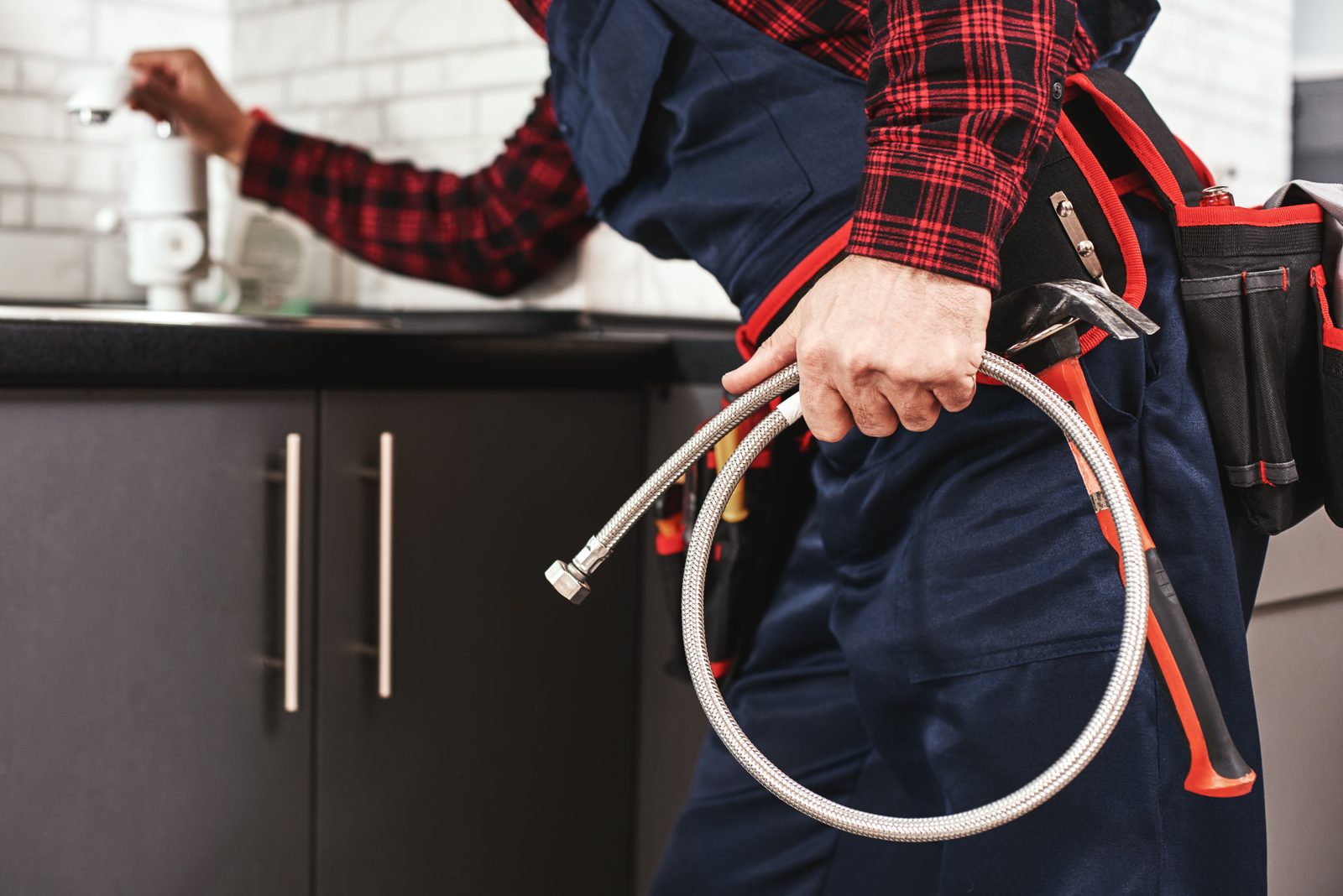
Plenty of plumbers want to quote a big repair before they've actually figured out the problem. We don't work that way. First we identify exactly what's leaking and why, then we tell you the smallest, smartest fix that solves the actual issue.

Got collapsing drain pipe under your basement floor? Instead of breaking up a whole basement's worth of concrete, we can sometimes run new lines overhead and tie them down to the front cleanout. Same result, thousands of dollars saved.
We'll tell you when that's the right call and when it isn't.
First: shut off your main water valve. It's usually in the basement near where the water line enters the house. Once water flow is stopped, call us at 920-904-9964. During business hours, active leaks jump to the front of our schedule. Outside business hours, you'll need to call a 24/7 emergency service.
Three things: (1) detach garden hoses every fall, (2) make sure your basement sills and rim joists are properly insulated so cold air isn't hitting water lines, (3) during deep cold snaps, let one faucet drip overnight on exterior walls. More winter prep tips on our FAQ →
Yes — when it makes sense. If you've got galvanized pipe from the 1950s that's leaking in three places, replacing it section by section is throwing money away. We can quote a full repipe and explain the realistic timeline.
Stains mean water has been there. They don't tell you whether the leak is active or already stopped. Worth a service call to confirm — small ongoing leaks behind drywall do massive long-term damage.
Most leaks we can locate without major demolition by tracing supply lines and using a process-of-elimination approach. For very tough cases, we may need to open a small section of drywall — but we'll always discuss it with you before we cut anything.
We can fix broken pipe under basement floors and reroute drainage runs. For deep sewer-line work that needs cameras, hydro-jetting, or pipe lining, we refer to specialists with that equipment. We'd rather send you to the right tool than do a half job.
Call during business hours and you'll get our team — not a call center, not an answering service. Most water heater jobs scheduled within 24 hours.
Hours: Mon–Fri · 7am–5pm · No After-Hours Emergency Service
